
Last Updated: November 11, 2026
Quick Summary
To simplify complex technical messaging, lead with the outcome rather than the mechanism, then explain how it works only if needed. Use plain language and short sentences, define each term the first time you use it, and keep one key takeaway per message.
- State what the technology does first, then explain how only if needed.
- Define a term the first time you must use it.
- Keep one core message per video and add captions for accessibility.
- Stakeholders need proof and outcomes, while the public needs plain language.
- Build a message structure once, then adjust emphasis per channel.
Table of Contents
- Simplify Complex Technical Messaging With a Repeatable Workflow
- How to Simplify Complex Technical Messaging Examples
- How to Explain Complex Technology in Simple Terms
- Using Video to Explain Complex Technical Concepts
- Adapting One Message Across Audiences and Channels
- Frequently Asked Questions
Simplify Complex Technical Messaging With a Repeatable Workflow
Complex technical messaging translates specialized information into clear language a general audience can act on. Run these steps in order, starting with the first.
Plain Writing Act guidance from the federal Plain Language Action and Information Network
For end-to-end help, our story strategy and production services cover messaging, documentary production, and delivery planning.
How to Simplify Complex Technical Messaging Examples
Before: "The system uses a multi-factor authentication protocol with token-based session validation." After: "You log in with a password and a code sent to your phone."
To apply this to your own message, start a conversation with our team about your event film, documentary, or live production.
How to Explain Complex Technology in Simple Terms
Lead with the outcome, not the mechanism: state what the technology does first, then explain how only if needed. Use plain language and short sentences, define a term the first time you must use it, and keep one key takeaway per message. Simplifying is not dumbing down, keep the accuracy and nuance stakeholders expect and cut only noise. For more, see our guide on creating lasting impact with corporate video.
Using Video to Explain Complex Technical Concepts
Video pairs plain language with visuals, graphs, and diagrams that show the concept instead of describing it; a short interview clip or animated sequence can carry a technical idea a page of text cannot.
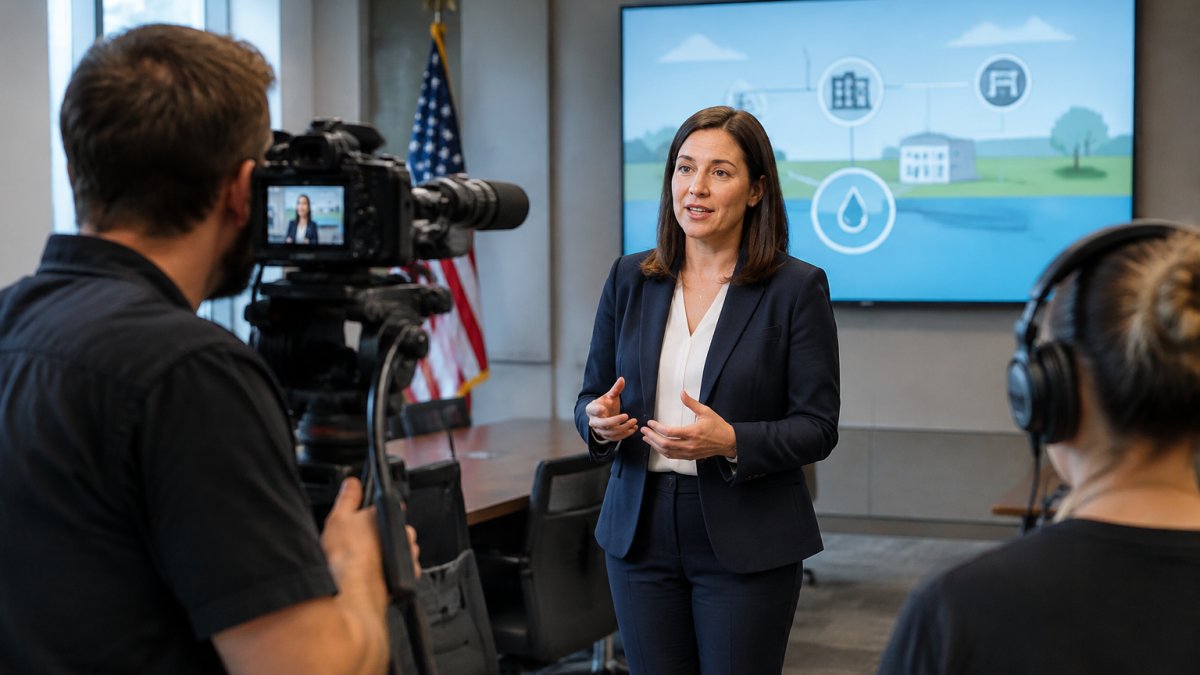
Keep the script short, one core message per video, add captions for accessibility, and test the cut with a small audience before release. The Web Content Accessibility Guidelines from the W3C set the captioning and contrast standards worth following.
Adapting One Message Across Audiences and Channels
One technical message rarely fits every audience: stakeholders need proof and outcomes, the public needs plain language and real-world impact, and procurement needs differentiation and compliance detail. Build a message structure once, then adjust emphasis per channel:
| Audience | Lead With | Keep Short | Proof to Add |
|---|---|---|---|
| Leadership | Outcome and risk | Mechanism | Milestones, results |
| Public | Benefits, plain language | All jargon | Everyday examples |
| Procurement | Differentiation, compliance | Marketing language | Capability proof |
Complex technical messaging fails when teams draft before they decide what the audience must remember. FR Creative Group builds mission-ready media that fixes that, combining documentary-style storytelling, event production, and live technical direction so high-stakes messages are understood, felt, and remembered. Get started with FR Creative Group and turn your complex program into a message your audience can repeat back to you.
Frequently Asked Questions
How can you simplify a technical message without losing important details?
Keep the detail that changes a decision and cut the rest. Write the full technical version first, then rewrite it for a specific audience, naming what they must do or understand. Move supporting nuance into a footnote, appendix, or on-screen lower third rather than the main sentence. The goal is technical accuracy at the audience's level of existing knowledge, not a shorter document with the substance removed.
How do you adapt technical messaging for different audiences?
Start from one core message, then change the proof and the channel. A procurement officer wants compliance and past performance; a patient community wants outcomes and plain language. Keep the same key takeaway but swap the evidence, the vocabulary, and the format. A single sentence can become a one-page brief for leadership, a plain-language explainer for the public, and a short video for a conference. Test comprehension with a few people outside the program before you publish.
Can visuals or video make complex technical messages easier to understand?
Yes, when they show the mechanism rather than decorate the slide. A short sequence that walks through how a process works, step by step, reduces the amount of jargon a viewer has to hold in memory. Video also carries tone and credibility, which matters for high-stakes public messaging. Keep on-screen text short, pair every technical term with an everyday example, and caption the video so it works with sound off and meets accessibility expectations.
