Last Updated: October 30, 2026
Quick Summary
Ask a video production company about its experience in your sector, who will lead your project, the step-by-step process, exactly what you will receive, and who owns the footage. Get every answer in writing before you sign.
- Ask for samples from projects similar to yours in sector, audience, and message type.
- Confirm the named project lead and how often you will speak with them.
- Request a deliverables matrix listing names, lengths, aspect ratios, and codecs.
- Define what counts as a revision, and how many review rounds are included.
- Get written answers on copyright, music licensing, and talent and location releases.
Table of Contents
- Why the Right Questions Matter Before You Sign
- Video Production Company Interview Questions About Experience and Fit
- Using a Video Production Proposal Checklist to Compare Vendors
- How the Video Production Process and Timeline Should Be Explained
- Deliverables, Revisions, Rights, and Who Owns the Footage
- Booking a Discovery Call to Scope Your Project
- Frequently Asked Questions
Why the Right Questions Matter Before You Sign
Choosing a video production company is a bigger decision than most buyers expect.
A video production company is more than a camera crew. It brings story strategy, scheduling, post-production, and delivery planning, and each piece can fail.
Use the list below as a working checklist. Ask the questions in the first call, write down the answers, and compare vendors side by side.
- Does the company have experience in your sector?
- Who will actually manage your project day to day?
- How does the production process unfold, step by step?
Video Production Company Interview Questions About Experience and Fit
A video production company should prove it can handle work like yours. Ask for samples that match your sector, audience, and message type. A strong portfolio shows range; a relevant one shows judgment.
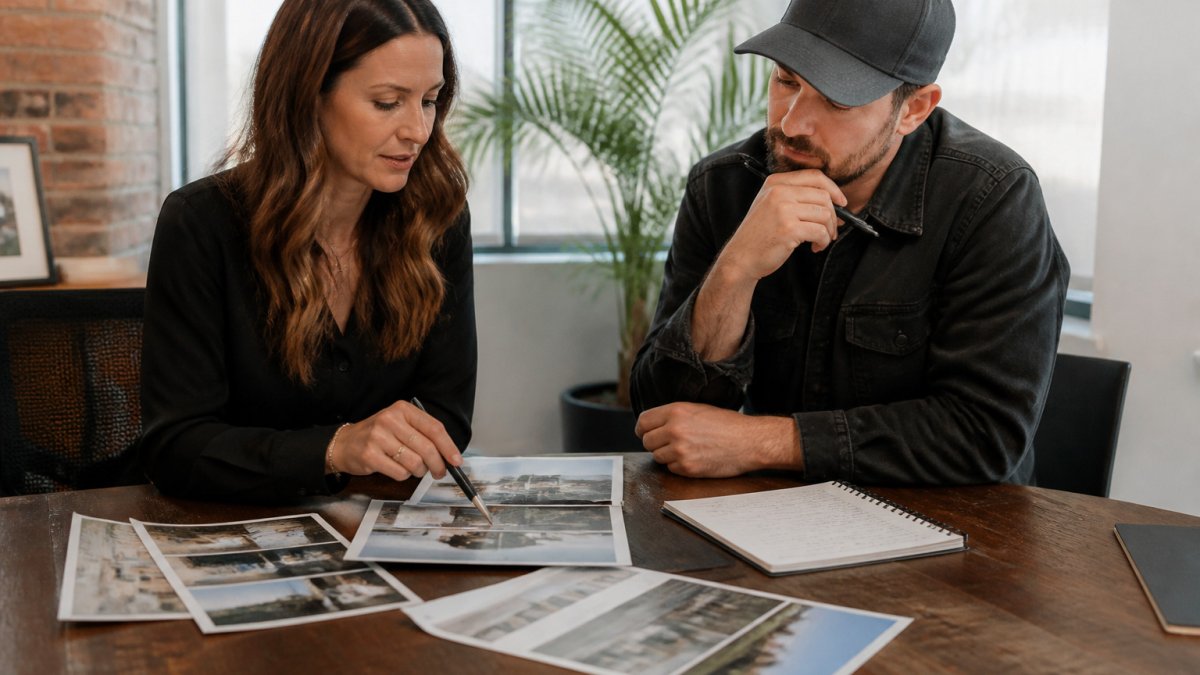
Next, ask who will lead your project. Many firms show a senior creative in the pitch, then hand the work to junior staff.
Asking About Government and Compliance Work
If your organization works with federal agencies or contractors, ask directly about that experience. You can also explore how to produce government compliance videos for training and compliance content.
A company without this background may still be talented. But you should know that before you sign, not after the first review round stalls.
Questions About Crew Size and Live Event Capability
If you plan to film conferences, panels, or hybrid events, confirm the crew and technical setup in writing. You can review the multi-camera livestreaming and real-time production service for conferences and hybrid events.
Crew size matters. A one-person shoot can work for a short interview. It will not cover three concurrent sessions.
Using a Video Production Proposal Checklist to Compare Vendors
A proposal tells you more than a sales call. Use a simple scorecard so you compare vendors on the same terms. For scoring criteria and an RFP checklist, see the corporate video production procurement guide.
| Criteria | What to Look For |
|---|---|
| Relevant experience | Past work in your sector and audience |
| Project lead | Named person with clear authority |
| Scope clarity | Deliverables listed by format and length |
| Timeline | Milestones with dates, not vague ranges |
| Revisions | Number of rounds and approval steps |
| Rights | Written terms on ownership and reuse |
Pricing depends on quantity, dates, and delivery requirements, so ask each vendor for a written quote that breaks out those items.
How the Video Production Process and Timeline Should Be Explained
A good company explains its process in plain steps and attaches dates to them. See how story strategy, documentary and event production, post-production, and delivery planning fit together across a full project. Most projects move through pre-production, production, and post-production, but the useful answer is the milestones, dependencies, and what happens when something slips.
Pre-Production: Research, Script, and Approvals
Pre-production covers research, scripting, scheduling, location scouting, and approvals. Ask what the company needs from you and when. Typical dependencies include:
- A kickoff call and a written creative brief.
- Script or outline drafts, with a defined number of review rounds.
- A shot list and storyboard for complex scenes.
Short brand films typically need one to three weeks of pre-production, longer for multi-location or multi-day shoots. Ask what happens if a script approval arrives late, does the shoot date move, and who absorbs the cost?
Production: The Shoot and Its Contingencies
Production is the shoot itself, and it is where risk concentrates. Ask:
- How many shoot days are quoted, and what happens if a shoot day runs long?
- What is the backup plan for weather, illness, or a location falling through?
- Who handles permits, insurance certificates, and site access?
Post-Production: Edit, Review, and Approval
Post-production includes editing, color, graphics, sound, captions, and review. Ask how review rounds work: is feedback consolidated in a shared tool with time-coded comments, how many rounds are included, and what counts as a change versus a new request? Confirm your approval chain, who signs off at each round, because a late stakeholder added mid-edit is the most common cause of schedule slip.
Delivery and Handoff
Delivery has its own checklist. Confirm final file formats, aspect ratios, captions, and the handoff method (download link, drive, or asset manager), plus how long files remain available. Tie this back to the deliverables matrix so nothing is promised verbally and lost in the handoff.
Timeline Milestones to Ask For
Ask the vendor to put the following in the proposal as dated milestones, not ranges:
| Milestone | What It Confirms |
|---|---|
| Kickoff and brief approved | Scope and goals are locked |
| Script or outline approved | Creative direction is locked |
| Shoot dates confirmed | Crew, locations, and permits are booked |
| First cut delivered | Edit direction is set |
| Review rounds complete | Feedback is closed |
| Final delivery | Files, captions, and handoff are complete |
If a vendor cannot describe the timeline with dated milestones, expect surprises later. The strongest proposals also name who is accountable for each milestone and what happens if a date slips.
Deliverables, Revisions, Rights, and Who Owns the Footage
Many buyers skip this section and regret it. Deliverables, revisions, and rights are where the fine print lives, and where the cheapest-looking quote can become the most expensive project. Get every item below in writing before you sign.
Post-Production Deliverables and File Handoff
Ask for a deliverables matrix, not a sentence. A useful one lists each finished asset by name, length, aspect ratio, resolution, frame rate, codec, and audio spec. For example, a single brand film might ship as a 16:9 master at 1920x1080 or 3840x2160, a 1:1 square cutdown for feed placements, a 9:16 vertical for stories and shorts, and a 15-second bumper, each with its own file. Confirm:
- Master format: What codec and bitrate is the archival master? (ProRes and high-bitrate H.264 are common; ask which you receive.)
- Platform versions: How many aspect ratios and cutdowns are included, and is each one a separate line item or bundled?
- Captions and transcripts: Are burned-in captions, sidecar caption files (SRT/VTT), and a plain-text transcript included? These are practical accessibility requirements, not extras.
Revisions and the Approval Process
"Revisions included" means nothing until you define a revision. Ask how many review rounds are included, whether rounds are counted per video or per project, and what counts as a change versus a new request. A common pattern is two rounds of consolidated feedback, with additional rounds billed hourly. Confirm:
- Who consolidates feedback on your side (one voice beats five).
- Whether feedback is delivered in a shared review tool with time-coded comments.
- What happens when a change alters the script, the shoot, or the edit structure, that is usually a change order, not a revision.
Rights, Licensing, and Ownership
This is the question buyers most often forget to ask, and the one that causes the most disputes after launch. Ownership of the final video and ownership of the underlying footage are two different things. Get written answers to:
- Who owns the copyright in the finished video, and does that transfer on final payment or only on request?
- Music licensing: Is the track licensed for commercial use, for how long, on which platforms, and in which territories? Production-library licenses often differ from broadcast or paid-media licenses.
- Talent and location releases: Are model releases and location releases secured, and do they cover the uses you plan (paid ads, web, internal training, trade show)?
Distribution and Performance Measurement
Ask how the company will tailor deliverables to the channels you actually use, and how you will define success. A vendor that only thinks about production will hand you one master file and leave you to resize it. A stronger partner will ask about placement, aspect ratios, captioning, and the metrics you report on, view-through rate, completion rate, click-through, or lead volume, and will build the deliverables and cutdowns around those goals.
A Deliverables and Rights Checklist
| Item | What to Confirm in Writing |
|---|---|
| Finished assets | Names, lengths, aspect ratios, resolutions, codecs |
| Cutdowns | How many, which platforms, bundled or line-itemed |
| Captions/transcripts | Burned-in, sidecar files, transcript included |
| Raw footage | Included or extra, format, delivery method |
| Project files | Included or retained, retrieval fee, retention window |
| Revisions | Rounds included, per-video or per-project, change-order terms |
| Copyright | Who owns final video, when it transfers |
| Music | License term, platforms, territory |
| Releases | Talent and location releases covering your intended uses |
| Stock assets | List of licensed footage, fonts, graphics |
Bring this table to the proposal stage and make each vendor answer every row. The vendor who can answer all ten without hedging is the one whose quote you can actually compare.
Booking a Discovery Call to Scope Your Project
The best next step is a short discovery call. Come prepared with your goal, audience, deadline, and approval chain, plus the questions above and your scorecard.
A discovery call is a useful way to map the story, schedule, and deliverables before any quote goes out. Owner-led, crew-scaled production means you may talk with the people who will shape your project.
Frequently Asked Questions
What should I ask a video production company before hiring them?
Start with recent projects similar to yours, then ask who will actually run your project and direct the shoot. Confirm how they handle pre-production planning, approvals, and revisions, and ask for a clear written scope. Request references from past clients in your sector. Ask how they manage compliance requirements, insurance, and vendor paperwork if you work with government or contracting clients. Finally, ask what happens to the footage after delivery and who holds the rights to it.
What should a video production proposal include?
A solid proposal lists the project goals, target audience, deliverables with formats and lengths, a production timeline with milestones, and the crew and roles involved. It should spell out pre-production, shoot days, post-production, and the number of revision rounds included. Look for a line-item budget that shows what drives cost, a payment schedule, and a section on usage rights and file handoff. A proposal that skips these details makes comparison difficult.
How many rounds of revisions are included in a video production project?
The number of revision rounds varies by company and should be written into the contract. Ask whether revisions are limited to one or two rounds of feedback on the rough cut and one on the final, and what counts as a substantive change versus a fix. Clarify how change orders are priced for requests outside the agreed scope. Consolidating all feedback from stakeholders into one document before each round prevents delays and extra cost.
Who owns the footage and final video?
Ownership depends on the contract, so this should be settled before filming starts. Many agreements give the client full rights to final edited videos and delivered files, but some companies retain raw footage, stock music licenses, or the right to use the work in their own portfolio. Ask for written terms on usage rights, licensing duration, and whether you receive raw footage and project files. Confirm any music or archival material is cleared for your intended distribution channels.
